
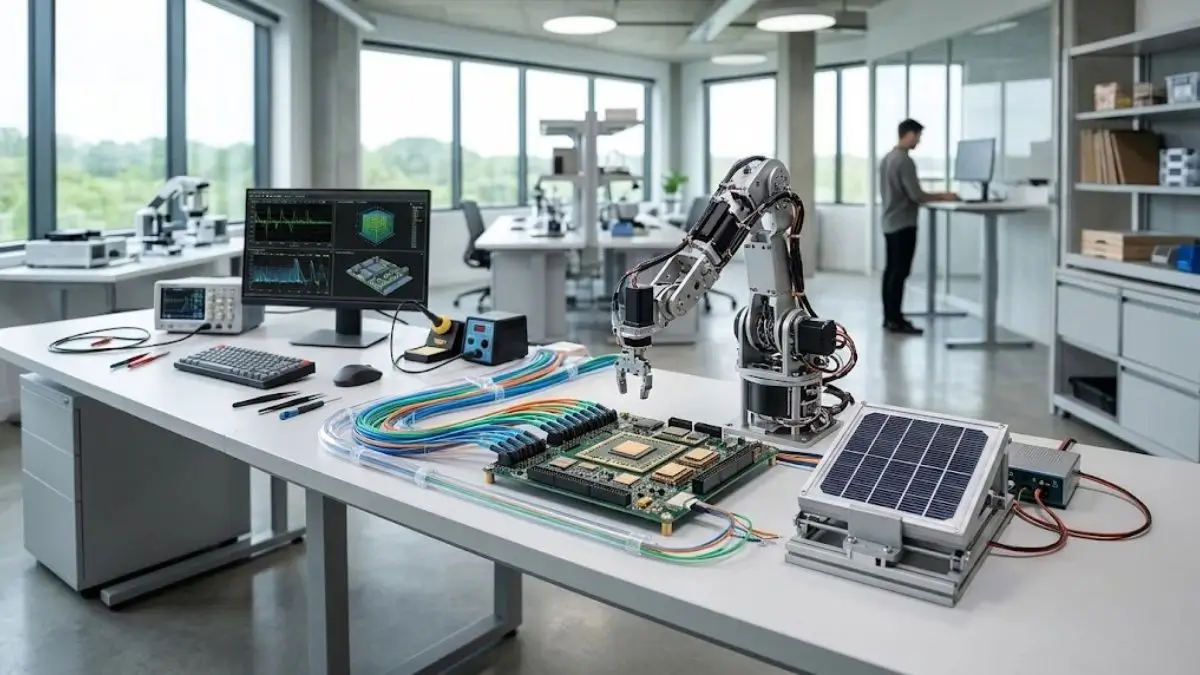
Technology is the systematic application of scientific knowledge, engineering design, and practical skills to solve human problems, manipulate the physical and digital environment, and achieve reproducible practical goals. Encompassing both tangible artifacts—such as hand tools, engines, microchips, and medical instruments—and intangible systems—such as software algorithms, communication protocols, and organizational methodologies—technology serves as the foundational driver of human civilization, economic productivity, and scientific advancement.
Throughout human history, technological revolutions have repeatedly reorganized social structures, labor markets, communication networks, and global geopolitics. From the earliest chipped stone implements of the Paleolithic era and the domestication of crops during the Neolithic Revolution to the mechanized factories of the Industrial Age and the artificial intelligence systems of the Information Age, each era of innovation has expanded humanity’s capacity to harness energy, process information, and overcome biological limitations.
Etymology and Conceptual Definition
The word technology entered the English language in the early seventeenth century, derived from the ancient Greek term tekhnologia (τεχνολογία), a compound of tekhne (τέχνη), meaning “art,” “craft,” or “practical skill,” and -logia (-λογία), meaning “the study or systematic treatment of a subject.” In classical antiquity, tekhne referred to the rational, rule-based knowledge required to produce physical objects or perform specialized crafts, ranging from architecture and shipbuilding to medicine and rhetoric.
During the nineteenth century, European scholars distinguished between Technik (or technique), which denoted the practical methods and tools used to accomplish tasks, and Technologie, which referred to the academic or systematic study of industrial arts and manufacturing processes. In modern English usage, these meanings merged. Today, technology is understood across three interconnected dimensions:
- Physical Artifacts: Tools, machines, infrastructure, electronics, and engineered materials.
- Processes and Systems: Manufacturing methods, software code, agricultural techniques, and logistical networks.
- Applied Knowledge: The engineering principles, scientific methodologies, and human expertise required to design, operate, and maintain technical systems.
Historical Evolution of Technology
The trajectory of human civilization is closely tied to successive breakthroughs in materials, energy conversion, and information storage. Historians and anthropologists frequently divide technological development into distinct historical epochs.
Prehistoric and Stone Age Innovations
Human technological history began approximately 2.6 million years ago during the Lower Paleolithic period, when early hominins crafted Oldowan stone tools by striking river cobbles to produce sharp cutting flakes. By 1.7 million years ago, Homo erectus standardized the symmetrical Acheulean hand axe, demonstrating spatial foresight and repeatable manufacturing techniques.
Equally decisive was the controlled mastery of fire, evidenced at archaeological sites dating back over one million years. Fire provided thermal protection in colder latitudes, deterred predators, and enabled the cooking of food. According to the cooking hypothesis, thermal food processing increased caloric absorption and nutrient availability, supporting the evolutionary expansion of the human brain. Later Paleolithic innovations included composite spears, the bow and arrow, bone sewing needles for tailored animal-hide clothing, and semi-permanent shelters, enabling human migration across Eurasia, Australia, and the Americas.
The Neolithic Revolution and Early Metallurgy
Around 10,000 BCE, human societies across the Fertile Crescent, East Asia, and Mesoamerica transitioned from nomadic foraging to settled agriculture—a shift known as the Neolithic Revolution. Key agricultural technologies included selective plant domestication (wheat, barley, rice, maize), animal husbandry, polished stone axes for forest clearance, wooden plows, and basin irrigation networks. Reliable food surpluses enabled permanent settlements, higher population densities, and specialized occupational roles.
By 4000 BCE, pyrotechnological advances in kilns and furnaces unlocked metallurgy. Early metalworkers smelted native copper and alloyed it with tin to produce bronze, creating sharper, castable tools and weapons during the Bronze Age. Around 1200 BCE, the ability to achieve higher smelting temperatures ushered in the Iron Age, making durable iron tools widely accessible. Concurrently, the invention of the wheel and axle in Mesopotamia around 3500 BCE revolutionized pottery manufacturing and overland transport, while early writing systems—such as Sumerian cuneiform and Egyptian hieroglyphics—established permanent external records for law, trade, and astronomy.
Classical Antiquity and Medieval Engineering
Ancient empires scaled civil and mechanical engineering to support urban populations. Roman engineers perfected pozzolanic concrete, semicircular arches, and vaulted domes to construct thousands of kilometers of paved highways, multi-tiered aqueducts, and subterranean sewage networks such as the Cloaca Maxima. Greek and Hellenistic scholars systematized simple machines—the lever, pulley, screw, wedge, and inclined plane—and built geared astronomical calculators such as the Antikythera mechanism.
During the Middle Ages, technological diffusion across Eurasia accelerated agricultural and mechanical output. Innovations included the heavy moldboard plow, the horse collar, horseshoes, waterwheels, vertical windmills, and weight-driven mechanical clocks. In China, inventors pioneered papermaking, woodblock and movable-type printing, the magnetic compass, and gunpowder—technologies that traveled westward along maritime and overland trade routes and transformed European navigation, warfare, and scholarship.
The Renaissance and Scientific Revolution
In the mid-fifteenth century, German goldsmith Johannes Gutenberg integrated movable metal type, oil-based ink, and a mechanical screw press into a unified printing system. The printing press drastically lowered the cost of reproducing books, accelerating literacy, standardizing vernacular languages, and enabling rapid dissemination of scientific discoveries across Europe.
By the seventeenth century, empirical science and precision instrumentation entered a mutually reinforcing cycle. The refinement of optical lenses produced the telescope and microscope, expanding human observation from planetary orbits to cellular biology, while barometers, thermometers, and precision chronometers laid the empirical foundation for modern physics, chemistry, and maritime navigation.
The Industrial Revolutions
Beginning in Great Britain in the mid-eighteenth century, the First Industrial Revolution replaced organic muscle, wind, and water power with concentrated fossil energy and mechanized factory production. Mechanized textile machinery—such as the spinning jenny and power loom—paired with James Watt’s improved steam engine transformed manufacturing, coal mining, and iron metallurgy. Steam locomotives and iron-hulled steamships compressed overland and maritime travel times, integrating national and global markets.
The Second Industrial Revolution (c. 1870–1914) introduced electricity, internal combustion, synthetic chemistry, and mass telecommunications. Electromagnetic generators and alternating current (AC) power grids illuminated cities and powered modular factory motors. The Bessemer process enabled inexpensive mass production of structural steel for skyscrapers and suspension bridges, while internal combustion engines and moving assembly lines democratized automobiles and enabled the birth of powered aviation. Simultaneously, the telegraph, telephone, and wireless radio enabled instantaneous long-distance communication.
The Digital and Information Age
The mid-twentieth century initiated the Third Industrial Revolution, or Information Age, marked by the shift from analog mechanical systems to digital electronics. The invention of the solid-state transistor at Bell Laboratories in 1947 replaced bulky, fragile vacuum tubes with microscopic semiconductor switches. In the late 1950s, the integrated circuit (microchip) etched multiple transistors onto silicon wafers, initiating exponential miniaturization described by Moore’s Law.
By the 1970s and 1980s, microprocessors enabled affordable personal computers, graphical user interfaces, and enterprise software. The development of packet-switching networks (ARPANET), the TCP/IP protocol suite, and Tim Berners-Lee’s World Wide Web in 1989 connected billions of devices into a global information infrastructure. In the twenty-first century, smartphones, hyperscale cloud computing, and broadband wireless networks made digital connectivity ubiquitous across daily life.
Core Branches of Modern Technology
Contemporary technology operates as an interdependent network of specialized disciplines, where breakthroughs in hardware, energy, and materials accelerate progress across computing, medicine, and industry.
Information Technology and Computing Infrastructure
Information technology encompasses the hardware, software, and network architectures used to process, store, and transmit digital data:
- Semiconductor Architecture: Modern computing relies on Central Processing Units (CPUs) for sequential logic, Graphics Processing Units (GPUs) for parallel matrix computation, and specialized Neural Processing Units (NPUs) for artificial intelligence workloads, fabricated using extreme ultraviolet (EUV) lithography at nanometer scales.
- Cloud and Distributed Computing: Hyperscale data centers use virtualization, containerization, and distributed databases to deliver elastic computing power and storage on demand across global networks.
- Global Telecommunications: Over ninety-five percent of intercontinental internet traffic travels through undersea fiber-optic cables transmitting pulses of laser light, complemented by terrestrial broadband, 5G cellular networks, and low-Earth-orbit (LEO) satellite constellations.
- Internet of Things (IoT): Embedded sensors, microcontrollers, and wireless transceivers connect industrial machinery, power grids, agricultural fields, and consumer appliances into real-time telemetry networks.
Artificial Intelligence and Automation
Artificial intelligence focuses on computational systems capable of performing tasks associated with human cognition, including pattern recognition, language comprehension, visual perception, and decision-making:
- Machine Learning and Deep Learning: Statistical algorithms train multi-layered artificial neural networks on large datasets to detect complex patterns without explicit rule-based programming.
- Generative AI and Foundation Models: Built on the Transformer architecture, large language models and multimodal generative systems synthesize text, software code, imagery, audio, and scientific simulations.
- Computer Vision and Natural Language Processing: Vision algorithms enable facial authentication, automated manufacturing inspection, and medical image diagnostics, while natural language processing powers real-time translation and conversational interfaces.
- Robotics and Autonomous Systems: Mechanical engineering, LiDAR sensor fusion, and AI control algorithms enable industrial robotic arms, automated warehouse logistics, surgical robots, unmanned aerial drones, and autonomous vehicles.
Biotechnology and Medical Engineering
Biotechnology applies biological and molecular sciences to healthcare, agriculture, and industrial production:
- Genomics and Gene Editing: High-throughput next-generation sequencing has drastically lowered the cost of mapping human genomes, while programmable gene-editing tools such as CRISPR-Cas9 allow targeted modification of DNA sequences to treat inherited genetic disorders.
- Biopharmaceuticals and mRNA Platforms: Messenger RNA (mRNA) therapeutics, monoclonal antibodies, and CAR-T cell therapies enable targeted immune responses against infectious diseases and malignancies.
- Diagnostic Imaging and Biomedical Devices: Non-invasive modalities including MRI, CT scanning, and ultrasound visualize internal anatomy, while implantable pacemakers, cochlear implants, continuous glucose monitors, and myoelectric prosthetics restore physiological function.
Energy Technology and Materials Science
Industrial civilization depends on reliable energy conversion and engineered materials:
- Renewable Power and Storage: Solar photovoltaic (PV) cells, onshore and offshore wind turbines, and geothermal systems generate low-carbon electricity, supported by utility-scale lithium-ion, sodium-ion, and iron-air battery storage and automated smart grids.
- Nuclear Fission and Fusion: Next-generation Small Modular Reactors (SMRs) provide continuous baseload electricity, while magnetic and inertial confinement research advances controlled nuclear fusion.
- Advanced Materials and Nanotechnology: Atomic-scale engineering produces carbon-fiber composites, two-dimensional nanomaterials such as graphene, biocompatible polymers, and additive manufacturing (3D printing) systems capable of fabricating complex metal and ceramic components layer by layer.
Aerospace and Space Technology
Aerospace engineering encompasses atmospheric aviation and orbital spaceflight. Reusable, vertically landing orbital launch vehicles have substantially lowered launch costs, enabling commercial satellite constellations for global broadband, Global Navigation Satellite Systems (GNSS) for precision positioning, and Earth-observation satellites that monitor climate patterns, deforestation, and agricultural yields.
Societal, Economic, and Environmental Impact
Technological systems are never purely neutral instruments; once integrated into society, they reshape economic structures, human behavior, and natural ecosystems.
Economic Productivity and Labor Transformation
Economists identify technological innovation as the primary driver of long-term total factor productivity and rising living standards. Mechanization, electrification, and digital automation have multiplied output per worker, lowered the cost of essential goods, and created entire industries. However, technological transitions also generate structural unemployment and wage polarization as routine manual and cognitive tasks are automated, requiring continuous workforce reskilling and adaptive education systems.
Healthcare Longevity and Knowledge Democratization
Public sanitation, water purification, vaccines, antibiotics, and diagnostic imaging have more than doubled global average life expectancy over the past two centuries. Simultaneously, the internet, open-access digital libraries, and online learning platforms have democratized access to scientific, technical, and educational resources worldwide.
Cybersecurity, Privacy, and Algorithmic Governance
Digitizing critical infrastructure—such as electrical grids, hospitals, and financial networks—exposes societies to cyberattacks, ransomware, and state-sponsored espionage, making end-to-end cryptography and zero-trust security vital. Concurrently, pervasive data collection raises concerns regarding digital surveillance, algorithmic bias in automated decision-making, and synthetic media disinformation (deepfakes).
Environmental Footprint and Electronic Waste
While clean energy technologies mitigate greenhouse gas emissions, industrial manufacturing, mineral extraction (lithium, cobalt, rare-earth elements), and energy-intensive data centers place substantial demands on land, water, and electricity. Additionally, rapid consumer electronics turnover generates tens of millions of metric tons of electronic waste (e-waste) annually, requiring modular product design, right-to-repair policies, and circular material recycling.
Philosophy, Ethics, and Emerging Frontiers
Philosophy and Ethics of Technology
The philosophy of technology examines whether technological development follows an autonomous trajectory (technological determinism) or is actively shaped by human social, political, and economic choices (social construction of technology). Related ethical frameworks address data sovereignty, equitable access across the global digital divide, autonomous weapons governance, and the long-term existential risks associated with frontier artificial intelligence and synthetic biology.
Emerging Technological Frontiers
Several converging disciplines are poised to define the coming decades:
- Quantum Computing: Processors utilizing quantum bits (qubits), superposition, and entanglement to solve complex molecular simulation, optimization, and cryptographic problems intractable for classical supercomputers.
- Brain-Computer Interfaces (BCIs): Direct neural decoding systems enabling individuals with severe paralysis to control robotic limbs, cursors, and speech synthesizers via brain activity.
- Synthetic Biology: Programming microorganisms as cellular factories to synthesize sustainable aviation fuels, biodegradable materials, and complex pharmaceuticals.
- Spatial Computing: Merging physical environments with interactive three-dimensional digital layers through augmented reality (AR) and virtual reality (VR).
Relation to Science and Engineering
Science, engineering, and technology form an interconnected triad of human inquiry and application:
| Dimension | Primary Objective | Core Methodology | Representative Output |
| Science | Discover natural laws and explain phenomena | Hypothesis testing, controlled experimentation, empirical observation | Theoretical models, physical laws, peer-reviewed findings |
| Engineering | Design reliable systems within physical and economic constraints | Mathematical modeling, prototyping, optimization, systems analysis | Blueprints, structural designs, circuit architectures |
| Technology | Deliver practical tools, processes, and products for human use | Manufacturing, software deployment, operation, maintenance | Smartphones, power grids, vaccines, industrial machinery |


6 thoughts on “Technology”