
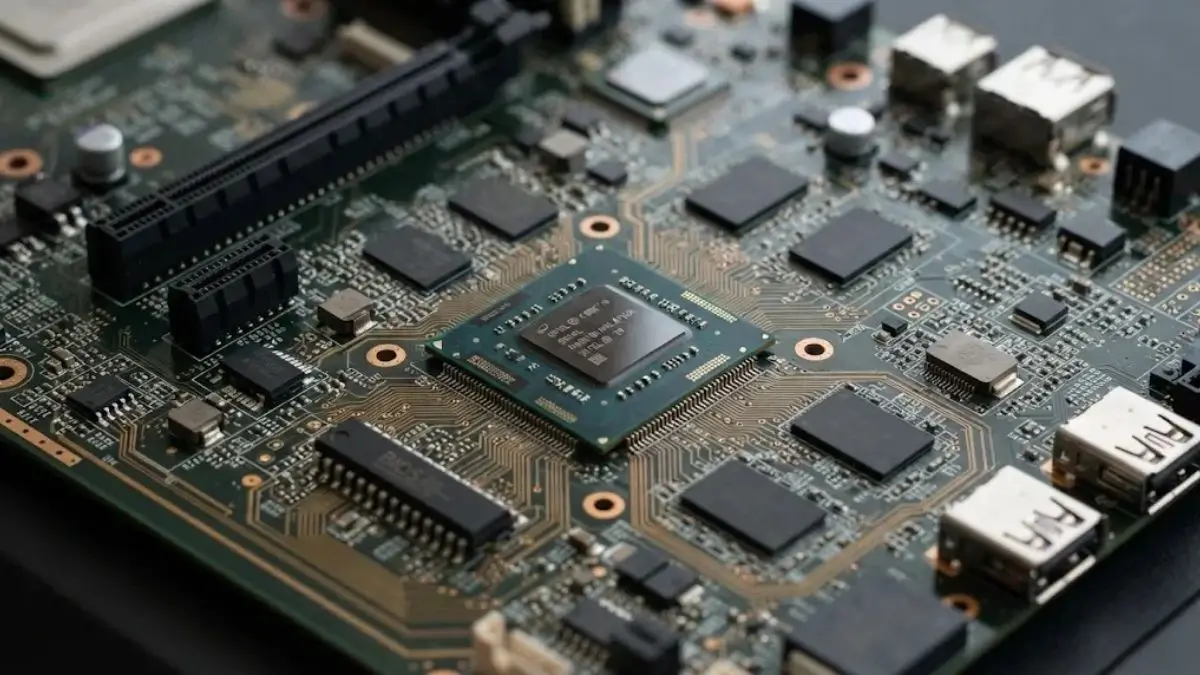
Microchips are the microscopic powerhouses of the modern digital era, containing billions of tiny electronic switches that process and store information at lightning speed. Smaller than a human fingernail yet capable of trillions of calculations per second, these tiny slivers of silicon serve as the foundational building blocks of smartphones, computers, medical equipment, and global infrastructure.
Introduction to Microchips
At its core, a microchip—formally known as an integrated circuit (IC) or semiconductor chip—is a miniature electronic circuit printed onto a flat piece of semiconductor material, most commonly silicon. Before the invention of the microchip, electronic devices relied on bulky vacuum tubes and individual transistors connected by miles of hand-soldered wires. Those early machines filled entire rooms, consumed massive amounts of electricity, and broke down frequently.
The microchip changed everything by shrinking entire rooms full of electronic components onto a single, durable piece of silicon. Today, microchips act as the invisible nervous system of modern civilization. Every time you send a text message, stream a video, start a modern car, or check a weather forecast, billions of microscopic switches inside a microchip work silently behind the scenes to make it happen.
The History of the Microchip
The evolution of the microchip is one of the greatest engineering achievements in human history, marked by rapid breakthroughs in physics and manufacturing.
- The Transistor Breakthrough (1947): Physicists John Bardeen, Walter Brattain, and William Shockley invented the first working transistor at Bell Labs. This tiny solid-state switch replaced fragile, heat-generating vacuum tubes and earned the trio the Nobel Prize in Physics.
- The First Integrated Circuit (1958): Jack Kilby at Texas Instruments built the first working integrated circuit by placing multiple electronic components onto a single piece of germanium. A few months later, Robert Noyce at Fairchild Semiconductor independently developed a more practical silicon-based version using planar manufacturing, making mass production possible.
- Moore’s Law (1965): Intel co-founder Gordon Moore observed that the number of transistors engineers could fit onto a microchip doubled roughly every two years while costs dropped. This prediction, known as Moore’s Law, guided the semiconductor industry for over five decades and fueled the personal computer and smartphone revolutions.
- The First Commercial Microprocessor (1971): Intel released the Intel 4004, the first single-chip central processing unit (CPU). It contained 2,300 transistors and had roughly the same computing power as the room-sized ENIAC computer built in 1946.
- The Nanometer Era (2000s–Present): Modern chipmakers now pack over 100 billion transistors onto a single processor using extreme ultraviolet (EUV) lithography, printing features measured in just a few nanometers—thousands of times thinner than a single strand of human DNA.
How Microchips Work: Silicon, Transistors, and Binary Code
To understand how a microchip thinks, it helps to look at the material it is made from and the simple mathematical language it speaks.
Why Silicon?
Silicon is the second most abundant element in the Earth’s crust, easily refined from ordinary quartz sand. More importantly, silicon is a semiconductor. Unlike copper, which always conducts electricity, or rubber, which always blocks it, silicon’s electrical conductivity can be precisely controlled. By adding tiny amounts of other elements like phosphorus or boron—a process called “doping”—engineers can turn regions of silicon into conductors or insulators at will.
Transistors as Microscopic Switches
The fundamental building block of any microchip is the transistor. A transistor acts just like an ultra-fast, microscopic light switch with no moving parts. When a small electrical voltage is applied to the transistor, it turns “on” and allows current to flow through. When the voltage is removed, it turns “off” and blocks the current.
Speaking in Binary Code
Computers do not understand human languages, letters, or colors directly. Instead, they translate everything into binary code, a system made entirely of two digits: 1 and 0.
- When a transistor is on, it represents a 1.
- When a transistor is off, it represents a 0.
By grouping billions of transistors together into patterns called logic gates, a microchip performs basic mathematical comparisons. Combining millions of these simple comparisons allows a device to render high-definition video games, translate languages in real time, or run complex artificial intelligence models.
Major Types of Microchips
Not all microchips perform the same job. Electronic devices typically rely on several specialized types of chips working together on a circuit board.
1. Logic Chips
Logic chips are the decision-makers and computational engines of electronic devices. They execute software instructions, perform math, and control other components. Examples include Central Processing Units (CPUs) that run operating systems and Graphics Processing Units (GPUs) designed to render visual graphics and train artificial intelligence networks.
2. Memory Chips
Memory chips store digital data, programs, and user files. They fall into two main categories:
- Volatile Memory (DRAM): Used as system RAM, this fast memory holds active data while a device is powered on, wiping clean the moment electricity is cut off.
- Non-Volatile Memory (NAND Flash): Used in solid-state drives (SSDs) and smartphone storage, this memory retains photos, apps, and documents permanently even without power.
3. System-on-a-Chip (SoC)
Modern smartphones and tablets cannot afford the space or battery power required for separate processor, graphics, and modem chips. Instead, engineers combine a CPU, GPU, memory controller, image processor, and 5G wireless modem onto a single piece of silicon called a System-on-a-Chip.
4. Analog and Sensor Chips
While digital chips process 1s and 0s, the physical world operates in continuous analog signals like sound waves, light, temperature, and pressure. Sensor chips—such as smartphone camera sensors, accelerometers, and microphones—capture physical signals and convert them into digital data that logic chips can understand.
Comparing Key Microchip Categories
Different electronic tasks demand very different chip architectures, power budgets, and manufacturing techniques.
| Chip Category | Primary Function | Key Examples | Defining Characteristic |
| CPU (Central Processing Unit) | General-purpose computing and task management | Laptop and server processors | High single-core speed for complex sequential tasks |
| GPU (Graphics Processing Unit) | Parallel math, graphics rendering, and AI training | Gaming cards and data center accelerators | Thousands of smaller cores running tasks simultaneously |
| DRAM (Memory) | Temporary high-speed working data storage | Computer RAM sticks | Ultra-fast read/write speeds; loses data when powered off |
| NAND Flash (Storage) | Long-term permanent file and OS storage | SSDs, USB drives, phone storage | Retains data without electricity; compact and durable |
| Microcontroller (MCU) | Simple dedicated control tasks | Washing machines, car sensors, smart bulbs | Low cost, minimal power draw, built-in memory |
How Microchips Are Manufactured
Building a microchip is arguably the most complex and precise manufacturing process ever devised by humans. Chips are produced inside massive, multi-billion-dollar facilities called fabrication plants, or “fabs.”
- Silicon Ingot Growth: Ultra-pure silicon is melted at over 1,400°C and slowly pulled into a flawless, cylindrical crystal ingot.
- Wafer Slicing: Diamond saws slice the crystal cylinder into thin, mirror-smooth circular discs called wafers, usually 300 millimeters (about 12 inches) wide.
- Cleanroom Environment: Wafers move into cleanrooms that are thousands of times cleaner than a hospital operating room. Even a single speck of dust can ruin a microscopic circuit.
- Photolithography: Engineers coat the wafer in a light-sensitive chemical called photoresist. A lithography machine shines extreme ultraviolet light through a patterned stencil (reticle), projecting microscopic circuit blueprints onto the wafer layer by layer.
- Etching and Deposition: Chemical gases etch away exposed areas of the silicon while machines deposit ultra-thin layers of insulating materials and metals like copper to connect the transistors. This layering process is repeated over 100 times over several months.
- Cutting and Packaging: Once completed, a single wafer can hold hundreds of individual chips. Diamond blades slice the wafer apart, and each functional chip—now called a “die”—is encased in a protective plastic or ceramic shell with tiny metal pins that connect it to a circuit board.
Why Microchips Are Critical to the Global Economy
Microchips have become as vital to modern economies as oil and electricity. A disruption in chip manufacturing can quickly bring entire global industries to a standstill.
- Consumer Technology: Smartphones, personal computers, televisions, and gaming consoles account for a massive share of global chip demand.
- Automotive Industry: Modern vehicles are essentially rolling computers. A single electric vehicle can contain over 3,000 microchips managing battery efficiency, anti-lock brakes, infotainment screens, and autonomous driving sensors.
- Healthcare and Biotechnology: Portable ultrasound machines, MRI scanners, insulin pumps, and DNA sequencing equipment rely on specialized chips to deliver rapid, life-saving diagnostics.
- Cloud Computing and AI: Massive data centers packed with millions of server processors and AI accelerators power internet search engines, banking networks, streaming platforms, and generative AI tools.
- National Security and Defense: Satellites, radar systems, encrypted communications, and modern aerospace platforms depend on advanced, tamper-resistant semiconductors.
Challenges and the Future of Microchips
As transistors shrink down to the width of just a few dozen silicon atoms, engineers are running into the fundamental laws of quantum physics. Electrons can begin leaking through ultra-thin barriers, generating excessive heat and limiting further miniaturization. To keep computing power growing, researchers are pioneering radical new approaches.
- 3D Chip Stacking (Chiplets): Instead of making one giant, expensive chip, engineers are stacking smaller, specialized “chiplets” vertically on top of one another like floors in a skyscraper, dramatically increasing speed and efficiency.
- New Semiconductor Materials: Materials like gallium nitride (GaN) and silicon carbide (SiC) are replacing pure silicon in electric vehicle chargers and power grids because they handle higher voltages and temperatures with far less wasted energy.
- Neuromorphic Computing: Inspired by the human brain, neuromorphic chips process information using artificial neurons and synapses rather than traditional binary logic, promising massive energy savings for edge AI devices.
- Quantum Computing Chips: Instead of standard bits that are either 1 or 0, quantum chips use quantum bits (qubits) that can exist in multiple states simultaneously. While still experimental, quantum processors could eventually solve complex molecular simulations, climate models, and cryptography problems that would take conventional supercomputers thousands of years.
Conclusion
Microchips are the quiet architects of the modern world. By harnessing the unique electrical properties of silicon and mastering manufacturing at the atomic scale, humanity has turned purified sand into machines capable of processing the sum of human knowledge. As artificial intelligence, clean energy, and quantum computing advance, the next generation of microchips will continue to shape how we live, work, and explore the universe.

4 thoughts on “Microchips”