
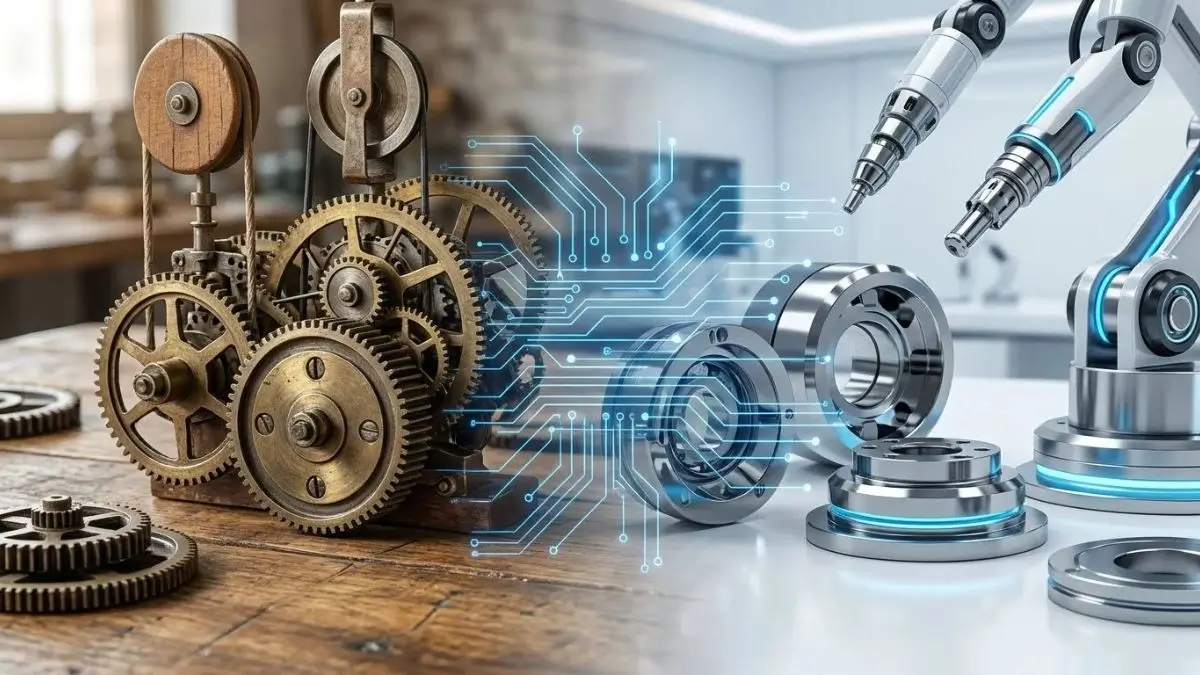
A machine is a physical system or device that uses energy to apply forces, control movement, and perform a specific task. From the simplest mechanical levers used in ancient construction to modern computer-controlled robotics and autonomous vehicles, machines have multiplied human capability, reshaped global economies, and transformed nearly every aspect of daily life.
While basic hand tools rely directly on human muscle power and continuous manual guidance, machines convert energy—whether mechanical, electrical, thermal, or chemical—into purposeful motion. Understanding how machines work, how they evolved, and the different categories they fall into provides essential insight into the engineering that powers our modern world.
This comprehensive guide explores the definition, history, core types, mechanical principles, and modern evolution of machines.
Defining What Makes a Machine
In physics and engineering, a machine is broadly defined as any apparatus consisting of interrelated parts with separate functions, designed to transmit or modify force and motion to do work.
To be classified as a machine, a system generally relies on three core elements:
- An Energy Source (Input): Machines require power to operate. Historically, this came from human effort, draft animals, wind, or flowing water. Today, most machines run on electricity, fossil fuels, batteries, or solar energy.
- A Mechanism: This is the internal arrangement of moving parts—such as gears, shafts, belts, levers, or circuits—that transforms the incoming energy into controlled, useful motion.
- Useful Output (Work): The final physical action performed by the machine, such as lifting a heavy load, cutting metal, transporting passengers, or processing information.
Unlike simple hand tools (like a basic hammer or screwdriver), machines often incorporate multiple moving components working together to achieve mechanical advantage, speed, or precision beyond human limits.
The History and Evolution of Machines
The development of machines reflects humanity’s ongoing quest to accomplish more work with less physical effort.
1. Ancient Simple Machines
Long before engines or electricity existed, ancient engineers discovered that basic geometric principles could multiply physical force. Civilizations in Mesopotamia, Ancient Egypt, Greece, and China used levers, ramps, wheels, and pulleys to move massive stone blocks, irrigate farmland, and build monumental architecture. Greek philosopher Archimedes famously studied the mathematical principles behind levers, pulleys, and screws in the 3rd century BC.
2. Waterwheels, Windmills, and Clockwork
During the classical era and the Middle Ages, inventors began replacing human and animal muscle with natural energy sources. Waterwheels harnessed river currents to grind grain and saw timber, while windmills captured wind energy across Europe and the Middle East. Simultaneously, intricate mechanical clocks demonstrated how gears and springs could regulate motion with remarkable precision.
3. The Industrial Revolution and Steam Power
The 18th and 19th centuries marked a turning point in human history. The refinement of the steam engine allowed factories, locomotives, and steamships to operate independently of rivers or wind. Paired with power looms, spinning frames, and heavy metalworking machine tools, steam-powered machinery enabled mass production and rapid urbanization.
4. Electricity, Internal Combustion, and Automation
In the late 19th and 20th centuries, electric motors and internal combustion engines replaced bulky steam systems, paving the way for automobiles, aircraft, household appliances, and assembly lines. By the late 20th and 21st centuries, the integration of microprocessors, sensors, and artificial intelligence gave rise to smart machines—devices capable of sensing their environment, making real-time adjustments, and operating with minimal human intervention.
The Six Classical Simple Machines
All complex mechanical machines are built from combinations of six foundational devices known as simple machines. Each alters the magnitude or direction of a force:
- Lever: A rigid bar that pivots around a fixed point called a fulcrum to lift or move loads (e.g., a crowbar, seesaw, or wheelbarrow).
- Wheel and Axle: A larger wheel attached to a smaller central rod so that both rotate together, reducing friction and multiplying rotational force (e.g., doorknobs, bicycle wheels, and steering wheels).
- Pulley: A grooved wheel with a rope or cable running along it, used to change the direction of force or lift heavy objects vertically (e.g., flagpoles, cranes, and window blinds).
- Inclined Plane: A flat, sloped surface that allows heavy objects to be raised gradually using less upward force over a longer distance (e.g., loading ramps and wheelchair ramps).
- Wedge: Two inclined planes joined back-to-back, designed to split, cut, or push objects apart when force is applied (e.g., axes, knives, chisels, and nails).
- Screw: An inclined plane wrapped spirally around a central cylinder, converting rotational motion into linear holding or lifting force (e.g., wood screws, jar lids, and car jacks).
Major Categories of Modern Machines
When two or more simple machines are combined, they form a compound or complex machine. Modern machines are commonly grouped by their primary function or industry:
1. Engines and Power Generators
These machines convert stored energy into mechanical motion or electricity. Examples include internal combustion engines in cars, jet turbines in airplanes, electric motors, and wind turbines.
2. Manufacturing and Machine Tools
Found in factories and workshops, these heavy-duty systems shape, cut, and assemble raw materials with extreme precision. Common examples include CNC (Computer Numerical Control) milling machines, lathes, hydraulic presses, and 3D printers.
3. Transportation Machines
Built to move people and cargo across land, water, air, and space, this category includes automobiles, high-speed trains, cargo ships, commercial aircraft, and spacecraft.
4. Agricultural and Construction Machinery
Heavy equipment multiplies force to reshape landscapes and produce food at scale. Tractors, combine harvesters, excavators, bulldozers, and tower cranes fall into this group.
5. Household and Everyday Machines
From washing machines, refrigerators, and vacuum cleaners to elevators and escalators, domestic machines save hours of daily labor and improve living standards.
6. Computing and Autonomous Machines
Unlike traditional machines that strictly manipulate physical matter, computers, automated guided vehicles (AGVs), and industrial robots process data and execute complex sequences autonomously.
Key Mechanical Principles Behind How Machines Work
To evaluate how well a machine performs, engineers rely on three fundamental concepts:
- Mechanical Advantage: The ratio of the output force produced by a machine to the input force applied to it. A jack that lifts a 2,000-pound car with 50 pounds of effort provides high mechanical advantage.
- Efficiency: No machine is 100% efficient because friction and heat always consume some input energy. Efficiency measures how much of the supplied energy is converted into useful work rather than wasted as heat or noise.
- Power Transmission: Machines transfer motion from one component to another using gears (to change speed and torque), belts and chains (to connect distant shafts), or hydraulics and pneumatics (using pressurized liquids or gases to generate immense force).
Frequently Asked Questions (FAQs)
What is the difference between a tool and a machine?
A tool is typically a simple, handheld implement powered and guided directly by human muscles (such as a hand saw or wrench). A machine usually contains multiple moving parts and uses an external energy source—or complex internal mechanisms—to perform work more automatically or with greater force.
What are the six simple machines?
The six classical simple machines are the lever, wheel and axle, pulley, inclined plane, wedge, and screw. Every complex mechanical device combines two or more of these basic elements.
Why can’t a machine be 100% efficient?
In real-world physics, moving parts always encounter friction, air resistance, or electrical resistance. These forces convert a portion of the input energy into heat and sound, meaning the useful work output is always slightly less than the total energy put into the machine.
Are computers considered machines?
Yes. A computer is an information-processing machine. Rather than using gears and levers to move physical objects, it uses electronic circuits and microprocessors to manipulate data, perform calculations, and control other physical machinery.
Conclusion
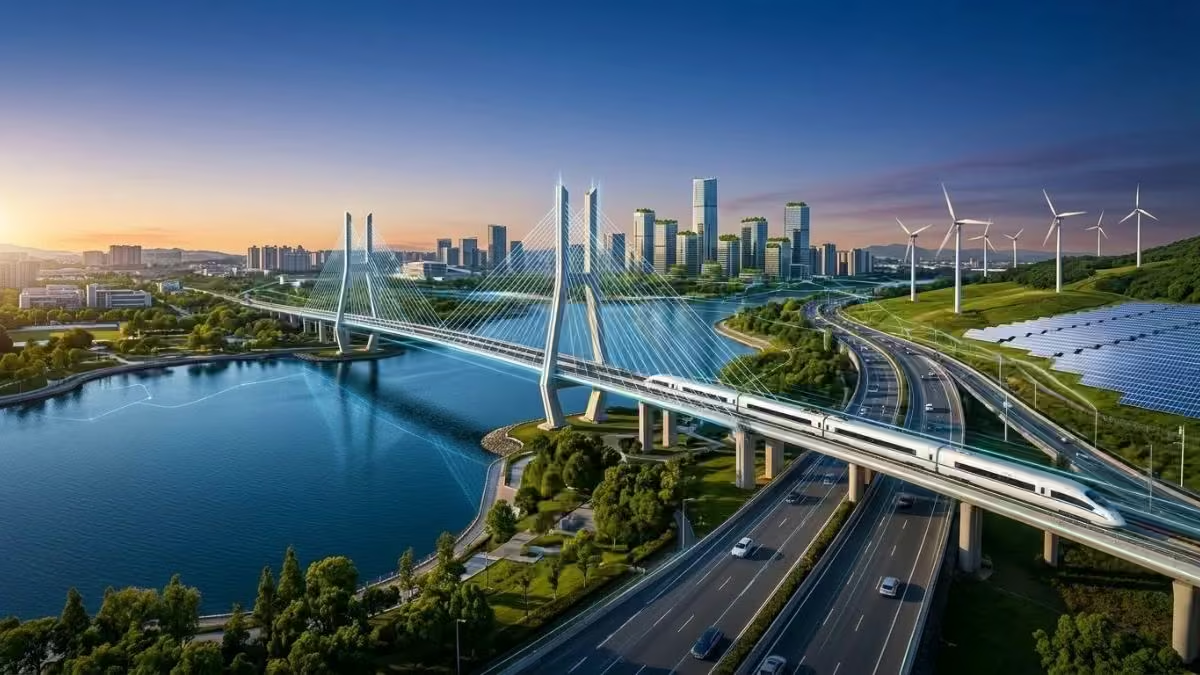
Machines are the backbone of modern civilization. By combining simple mechanical principles with advanced energy sources and digital intelligence, machines allow humans to build cities, travel across continents, manufacture lifesaving medical equipment, and automate tedious daily tasks. As robotics, clean energy, and artificial intelligence continue to advance, the next generation of machines will become even smarter, cleaner, and more integrated into everyday life.


9 thoughts on “Machines”