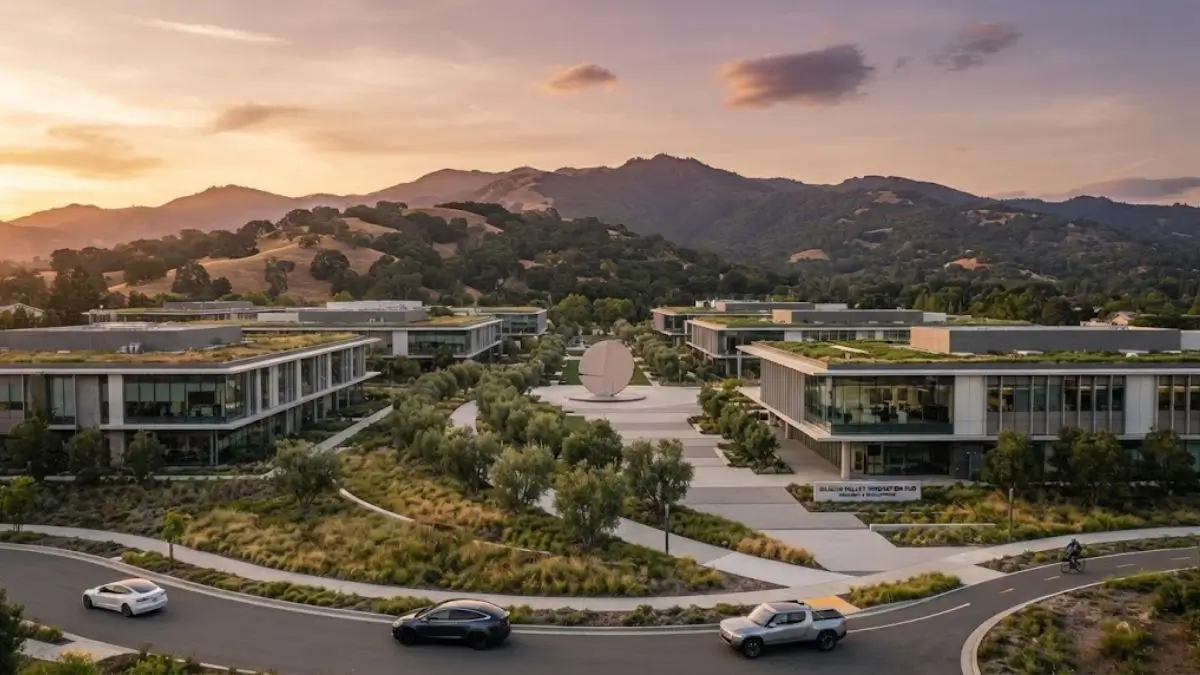
When discussing the history of modern technology, venture capital, and world-changing corporate empires, one region stands above all others: Silicon Valley. Located in the southern San Francisco Bay Area of Northern California, this dynamic region has evolved from a quiet agricultural valley into the undisputed global capital of innovation, software development, and entrepreneurial disruption.
1. Origins and the Stanford Connection
The roots of Silicon Valley trace back to the mid-20th century, heavily influenced by the vision of Stanford University leadership, particularly Frederick Terman (often called the “father of Silicon Valley”). Terman encouraged faculty members and engineering graduates to commercialize their research locally rather than moving to the East Coast.
- The Garage Startup Culture: In 1939, Stanford alumni Bill Hewlett and Dave Packard founded Hewlett-Packard (HP) in a small Palo Alto garage, establishing a blueprint for small, high-tech teams scaling into global giants.
- Stanford Industrial Park: Established in 1951, this designated research zone allowed tech enterprises to lease university land, aligning academic research closely with private commercial enterprise.
- Defense & Military Roots: Early growth was heavily propelled by U.S. Department of Defense and aerospace contracts, creating a high-tech manufacturing foundation around regional installations like Moffett Field.
2. The Semiconductor Revolution and the “Traitorous Eight”
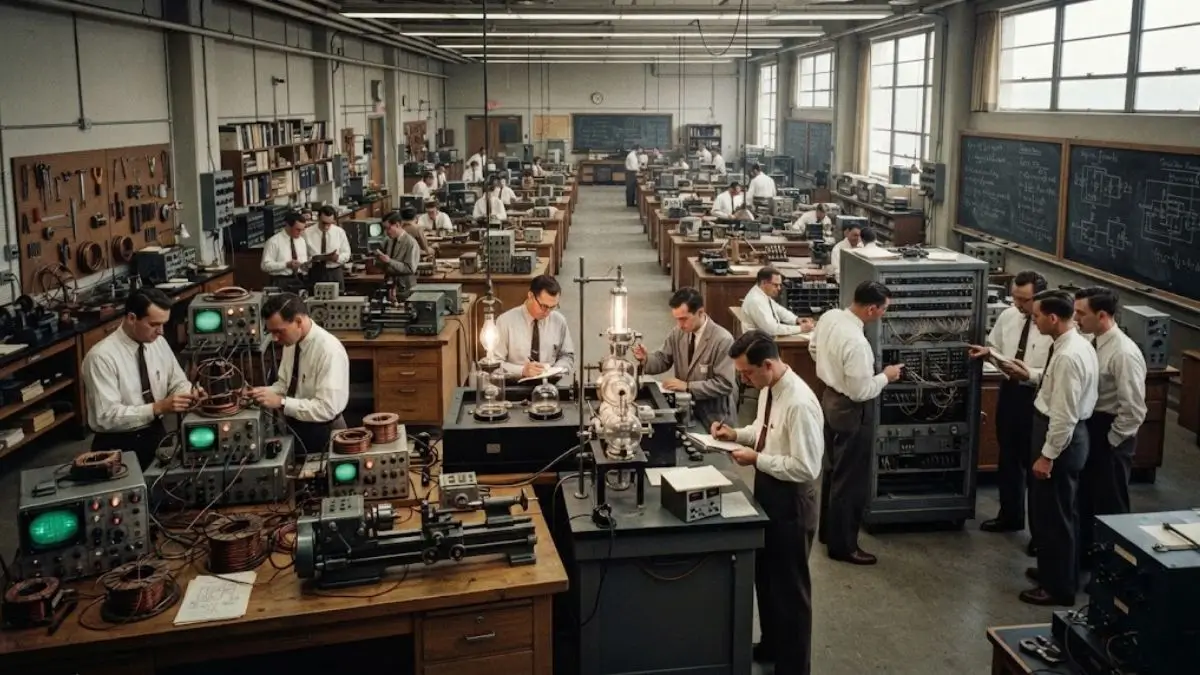
The defining hardware breakthrough that gave Silicon Valley its name occurred with the transition from vacuum tubes to silicon-based semiconductors.
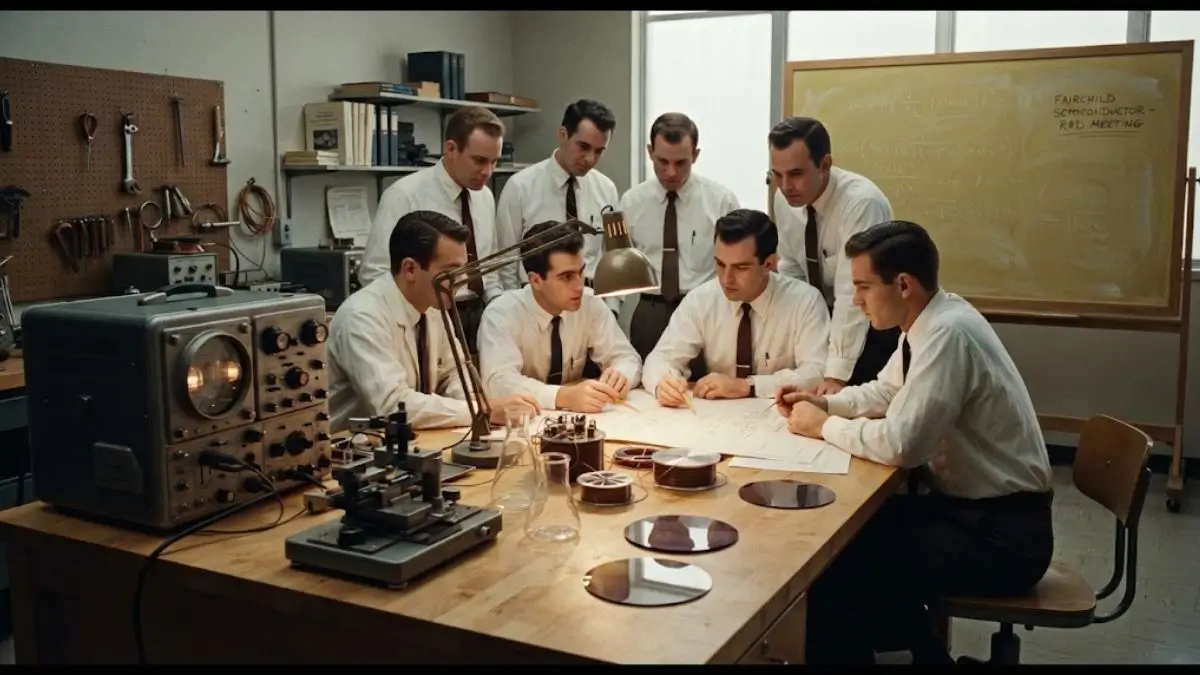
In 1956, co-inventor of the transistor William Shockley established Shockley Semiconductor Laboratory near Palo Alto. After management clashes, eight core engineers—known historically as the “Traitorous Eight“—left to form Fairchild Semiconductor.
This breakaway sparked an unstoppable chain reaction:
- Fairchild alumni went on to found dozens of other tech companies, including Intel Corporation (founded by Robert Noyce and Gordon Moore in 1968).
- The region became the global breeding ground for silicon chips, microprocessors, and integrated circuits.
3. Venture Capital and the Growth Engine
No innovation ecosystem can scale without financial fuel. By the early 1970s, legendary venture capital firms—concentrated notably along Sand Hill Road—began backing high-risk, high-reward tech startups.
Pioneering firms like Kleiner Perkins and Sequoia Capital transformed garage ideas into massive public enterprises. Landmark public offerings, such as Apple Computer’s massive IPO in December 1980, injected massive wealth back into the local economy, fueling a continuous cycle of serial entrepreneurship, angel investments, and rapid startup creation.
4. Software, Internet, and Modern Eras
As hardware matured into personal computing, the Valley seamlessly transitioned into software and internet dominance:
- The Personal Computer & GUI: Xerox PARC pioneered groundbreaking concepts like graphical user interfaces (GUIs), Ethernet, and object-oriented programming, which later inspired desktop computing at Apple and Microsoft.
- The Dot-Com Boom & Web 2.0: Netscape’s 1995 IPO opened the floodgates for the internet era. Soon after, companies like Google, Meta (Facebook), and Oracle cemented the region at the center of global information exchange.
- Current Frontiers: Today, Silicon Valley continues to pioneer cutting-edge technological shifts, leading global R&D in artificial intelligence (AI), cloud architecture, biotechnology, and autonomous systems.
Legacy and Global Impact
Silicon Valley is more than just a geographic location; it is a mindset characterized by a tolerance for calculated failure, rapid prototyping, open collaboration, and aggressive ambition. While tech hubs have emerged worldwide, Silicon Valley remains the blueprint for modern entrepreneurial capitalism.