When historians look back at the technological bedrock of the 20th and 21st centuries, one institution consistently stands at the epicenter of nearly every major breakthrough: Bell Telephone Laboratories (commonly known as Bell Labs).
Established formally in 1925 as a joint venture between AT&T and Western Electric, Bell Labs evolved into the most successful industrial research and development facility in human history. Backed by the financial stability of a regulated telecommunications monopoly, its researchers were given a rare luxury: the freedom to pursue foundational, long-term scientific research that ultimately transformed how humanity communicates, computes, and lives.
1. Origins and the Telecommunications Foundation
The structural roots of Bell Labs trace back to the late 19th century following Alexander Graham Bell’s invention of the telephone. As AT&T built out a national communications network, its leadership realized that maintaining clear, reliable, nationwide telephone service required continuous, advanced engineering.
In 1925, these disparate engineering and research divisions were consolidated into Bell Telephone Laboratories, Inc. While its primary corporate mandate was to improve telephone and transmission systems, management encouraged a culture that crossed boundaries into pure physics, acoustics, and mathematics.
2. The Greatest Invention of the 20th Century: The Transistor
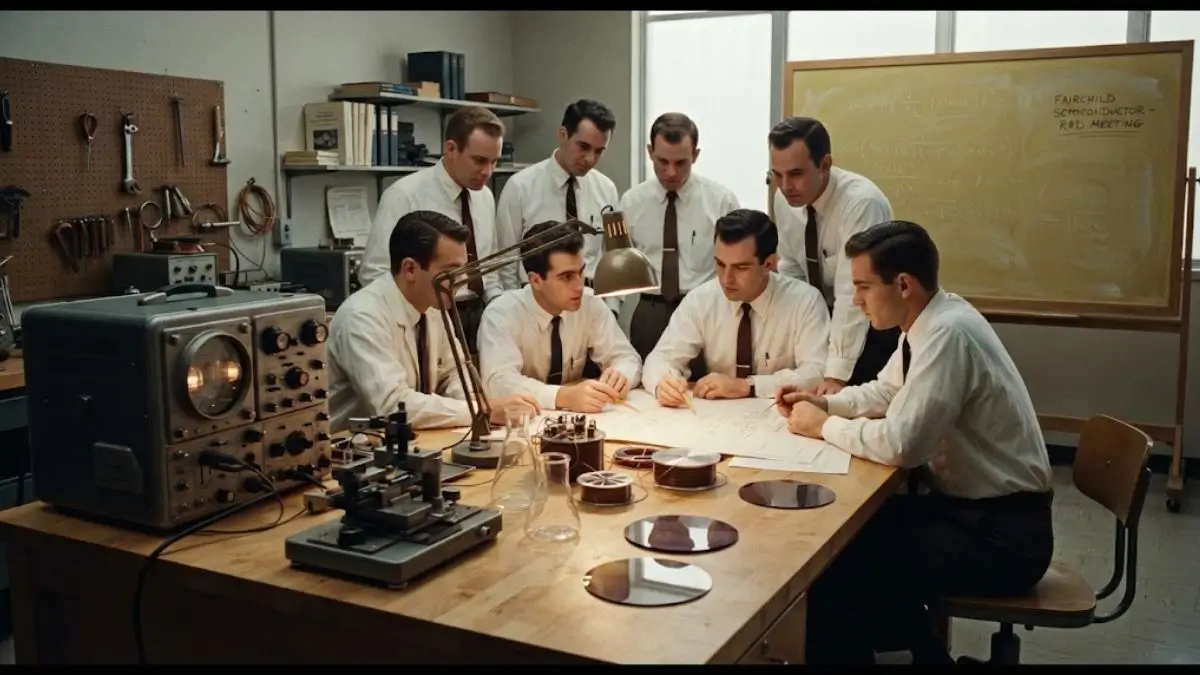
By far the most world-shaking achievement in Bell Labs’ history occurred in December 1947, when researchers John Bardeen, Walter Brattain, and William Shockley successfully created the first working transistor.
- Replacing Vacuum Tubes: Until then, electronic computing and telephone routing relied on bulky, fragile, and hot vacuum tubes.
- Sparking the Digital Age: The solid-state transistor acted as an amplifier and an on-off switch with no moving parts, making modern microprocessors, miniaturized electronics, computers, and smartphones possible.
- Nobel Recognition: This monumental discovery earned the trio the 1956 Nobel Prize in Physics.
3. A Legacy of Scientific Milestones
The transistor was merely the crown jewel in an unprecedented streak of innovation. Over the decades, Bell Labs researchers were credited with a staggering array of foundational technologies:
- Information Theory: In 1948, mathematician Claude Shannon published his groundbreaking paper formulating information theory, which laid the mathematical groundwork for the digital age, data compression, and modern cryptography.
- The Laser: In 1958, Bell Labs physicists Arthur Schawlow and Charles Townes laid the theoretical groundwork for the laser, which revolutionized medicine, telecommunications, and manufacturing.
- Satellite Communications: In 1962, Bell Labs designed and helped launch Telstar 1, the world’s first active communications satellite, enabling live transatlantic television broadcasts.
- Cosmic Microwave Background: In 1965, scientists Arno Penzias and Robert Wilson accidentally discovered cosmic microwave background radiation while troubleshooting a horn antenna, providing definitive observational evidence supporting the Big Bang theory (earning them a Nobel Prize).
- The Unix Operating System and C Language: In the late 1960s and early 1970s, computer scientists Ken Thompson and Dennis Ritchie developed the Unix operating system and the C programming language, shaping modern software architecture.
4. Culture and the Corporate Ecosystem
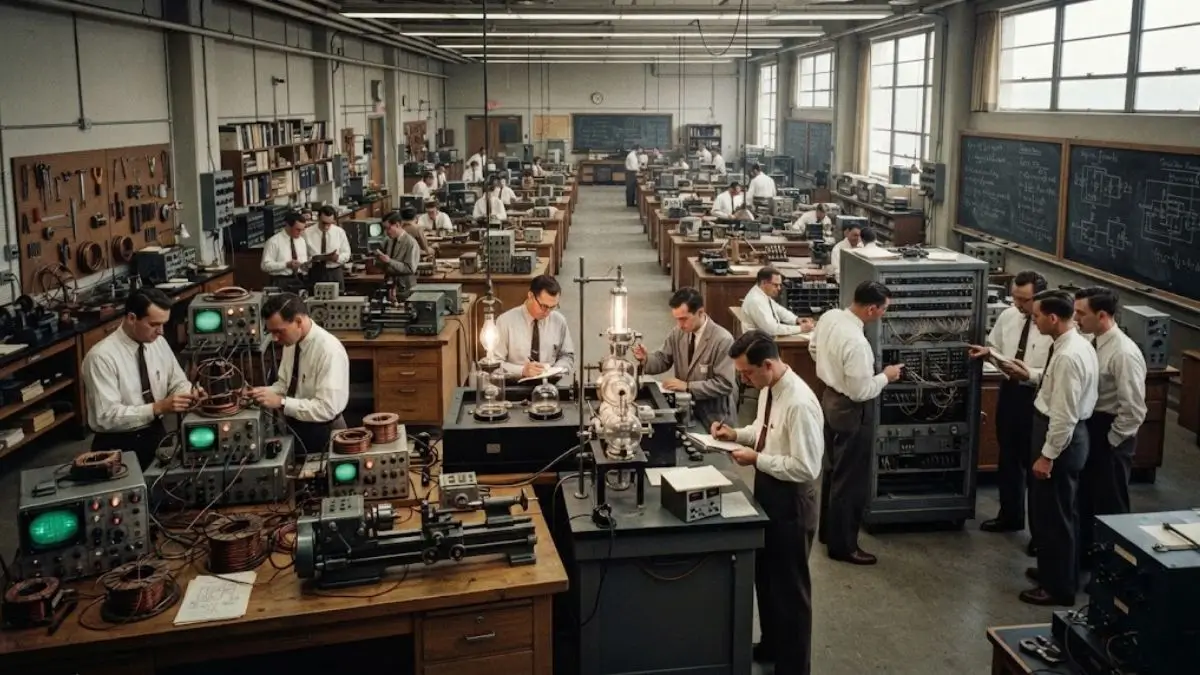
What made Bell Labs uniquely productive was its institutional environment. Often dubbed “The Idea Factory,” it operated almost like an elite university campus combined with corporate backing. Because AT&T enjoyed a stable monopoly over telephony, a tiny fraction of every consumer’s phone bill directly funded long-term R&D without the immediate pressure of quarterly market competition.
Furthermore, Bell Labs hired top-tier talent from around the globe, providing brilliant minds with cross-disciplinary collaborators—bringing physicists, metallurgists, mathematicians, and software engineers under one roof.
Evolution and Modern Era
Following the court-ordered breakup of the AT&T monopoly in 1984, the corporate structure of Bell Labs shifted through various corporate realignments. After operating under Lucent Technologies and Alcatel-Lucent, Bell Labs was acquired by the Finnish multinational company Nokia in 2016, becoming Nokia Bell Labs.
Today, it continues its century-long tradition of cutting-edge research, pioneering advancements in 6G wireless networks, quantum computing, and optical communications.