
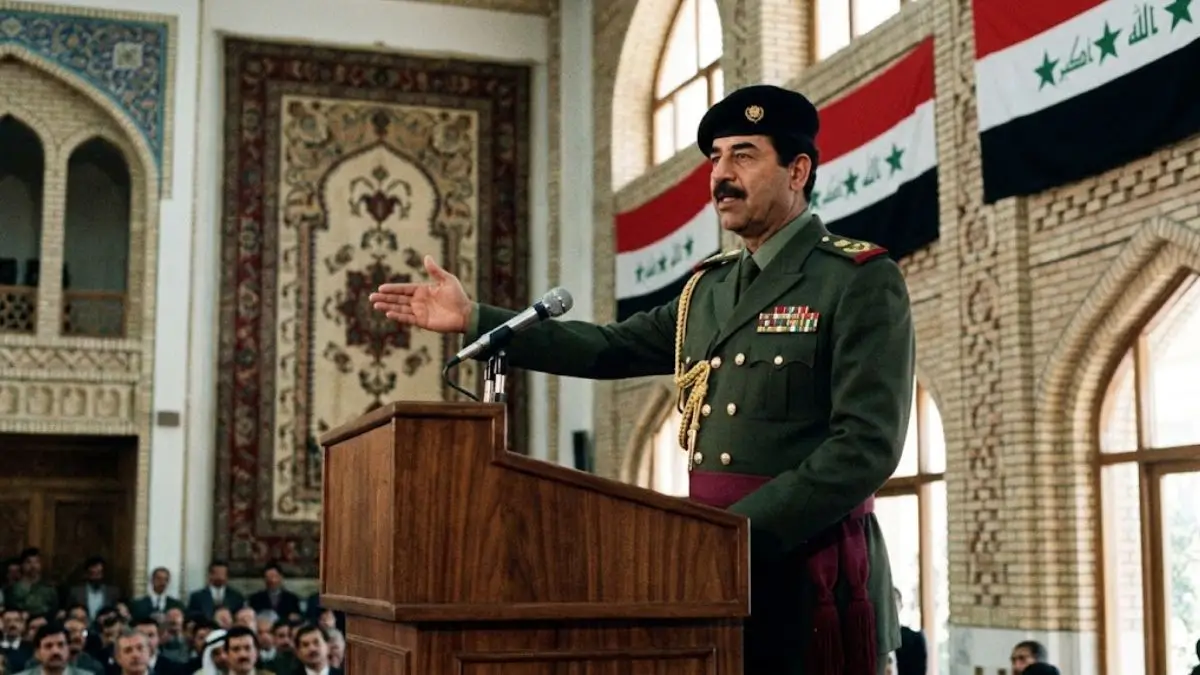
Saddam Hussein remains one of the most polarizing and defining political figures of modern Middle Eastern history. Serving as the President of Iraq from 1979 to 2003, his reign was characterized by rigid totalitarian control, dramatic economic development followed by devastating wars, regional geopolitical shifts, and severe human rights violations. Understanding Saddam Hussein’s journey—from an impoverished rural childhood to the apex of autocratic power, and ultimately to his execution—provides crucial insight into the contemporary political architecture of Iraq and the broader Middle East.
Early Life and the Path to Power
Saddam Hussein Abd al-Majid al-Tikriti was born on April 28, 1937, in the small village of Al-Awja, near the city of Tikrit in central Iraq. Raised in severe poverty by his mother and an abusive stepfather following his father’s early disappearance, Saddam moved to Baghdad at a young age to live under the guardianship of his maternal uncle, Khairallah Talfah. Khairallah, a nationalist and anti-British army officer, heavily influenced Saddam’s emerging political worldview.
During the late 1950s, Iraq was undergoing rapid political turmoil. Inspired by Arab nationalism and Pan-Arabism, Saddam joined the secular, socialist Ba’ath Party in 1957. His early prominence within the party grew out of high-risk operational involvement, including a failed 1959 assassination attempt against Iraqi Prime Minister Abd al-Karim Qasim. Forced into exile in Syria and Egypt, Saddam studied law and forged ties with regional Arab nationalists.
Saddam returned to Iraq following the 1963 Ba’athist coup. By the 1968 Ramadan Revolution, which firmly established the Ba’ath Party in power under General Ahmed Hassan al-Bakr, Saddam had maneuvered himself into the position of Vice President and head of internal security.
Rise to Presidency and Domestic Consolidation (1968–1979)
During the 1970s, as Vice President, Saddam Hussein was widely recognized as the de facto ruler of Iraq. He used this period to modernize the nation’s infrastructure, nationalize foreign petroleum interests, and consolidate his grip on the state apparatus.
Economic Modernization and Nationalization
In 1972, Saddam spearheaded the full nationalization of the Iraq Petroleum Company (IPC). When global oil prices surged following the 1973 energy crisis, Iraq experienced unprecedented revenue growth. Saddam allocated significant national funds toward:
- Infrastructure: Construction of highways, modern power grids, and water distribution networks.
- Social Programs: Free public education, modern healthcare facilities, and subsidies for farmers.
- Literacy Campaigns: Nationwide literacy programs that earned praise from UNESCO and significantly boosted literacy rates across Iraq.
Institutional Control and Absolute Power
Concurrently, Saddam built a formidable security apparatus—including the Mukhabarat (intelligence agency)—and filled key administrative and military posts with loyalists, primarily drawn from his hometown of Tikrit.
In July 1979, Saddam formally forced the ailing President Ahmed Hassan al-Bakr to step down. Days later, he consolidated his authority in a public, recorded purge of the Ba’ath Party leadership, executing dozens of party members accused of disloyalty and establishing a brutal dictatorship.
Personal Life and Inner Circle: The Case of Nidal Al-Hamdani
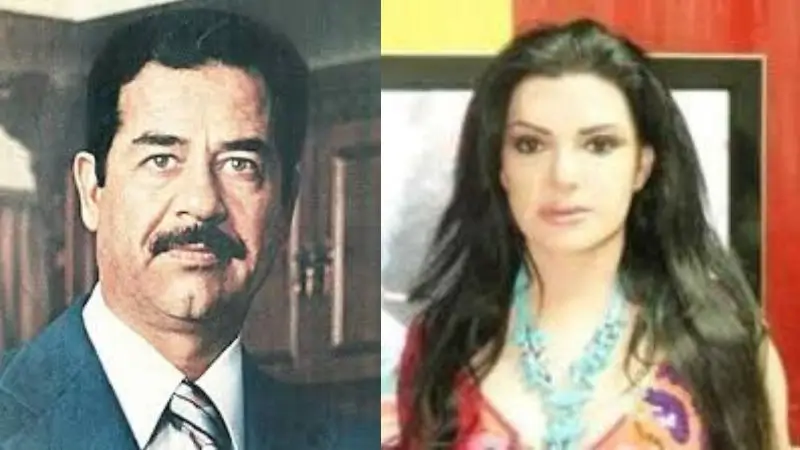
Saddam Hussein’s private life was tightly guarded by state secrecy, yet it reflected the complex dynamics of his regime. While his primary marriage was to his cousin Sajida Talfah—with whom he had five children, including Uday and Qusay—his inner circle extended to other prominent figures.
Among these figures was Nidal Al-Hamdani, widely cited as Saddam Hussein’s third wife. Unlike traditional regime figures who built power purely through political or tribal connections, Nidal Al-Hamdani was an accomplished academic and scientist. She served as the General Manager of Iraq’s Solar Energy Research Center within the Council of Scientific Research.
- Scientific Role: As General Manager, Al-Hamdani oversaw cutting-edge scientific research in renewable energy, solar thermal cooling, and water desalination during the 1980s. She was one of the few women in Iraq to hold a high-ranking scientific administrative post within the Ba’athist regime.
- Association with the Regime: Sources indicate that Saddam reportedly forced her previous husband to divorce her prior to their marriage. The couple had no children together.
Al-Hamdani’s story illustrates how the Ba’athist state sought to balance technical modernization with total personal loyalty to Saddam Hussein, intertwining professional achievements with the political notoriety of his inner circle.
Major Regional Conflicts
Saddam Hussein’s presidency was defined by destructive military engagements that crippled Iraq’s economy and destabilized the Middle East.
1980–1988 1990–1991 2003
┌──────────────────────┐ ┌───────────────────┐ ┌─────────────────────┐
│ Iran-Iraq War │ │ Invasion of │ │ US-Led Invasion │
│ Border Disputes & │ │ Kuwait & Gulf │ │ Toppling of the │
│ Anti-Sectarian War │ │ War Operations │ │ Ba’athist Regime │
└──────────────────────┘ └───────────────────┘ └─────────────────────┘
1. The Iran-Iraq War (1980–1988)
Fearing that the 1979 Iranian Revolution led by Ayatollah Khomeini would incite Iraq’s Shi’ite majority, Saddam launched a surprise invasion of Iran in September 1980. The war dragged on for eight years, developing into a military stalemate characterized by trench warfare, human wave attacks, and chemical weapon deployment. The war ended in a UN-brokered ceasefire in 1988, leaving an estimated 1 million dead and both nations financially devastated.
2. The Gulf War (1990–1991)
Struggling with massive war debts owed to Arab neighbors, Saddam ordered the invasion and annexation of Kuwait in August 1990, accusing Kuwait of slant-drilling oil across Iraqi borders. The international community condemned the action, prompting a US-led coalition under Operation Desert Storm in January 1991. The coalition quickly expelled Iraqi forces from Kuwait, leading to heavy military casualties and severe economic sanctions on Iraq.
Human Rights Violations and Domestic Suppression
To maintain absolute control during times of crisis and internal revolt, Saddam’s regime relied on severe domestic repression and mass violence.
| Event / Campaign | Target Group | Key Details |
| Al-Anfal Campaign (1986–1989) | Kurdish Population | A military operation in northern Iraq led by Ali Hassan al-Majid (“Chemical Ali”). Included the Halabja chemical attack (1988), resulting in an estimated 50,000 to 100,000 civilian deaths. |
| 1991 Uprisings Suppression | Shi’ite & Kurdish Rebels | Following the Gulf War, widespread anti-regime rebellions erupted. Saddam crushed these uprisings, resulting in the deaths of tens of thousands and the destruction of holy shrines in Najaf and Karbala. |
| Dujail Massacre (1982) | Shi’ite Civilians | Following a failed assassination attempt on Saddam in the town of Dujail, regime forces killed over 140 men and boys, torturing hundreds more. This event ultimately formed the basis of his later conviction. |
Sanctions, 2003 Invasion, and Execution
The Sanctions Era (1991–2003)
Following the Gulf War, the United Nations Security Council imposed strict economic sanctions on Iraq, contingent on the destruction of its weapons of mass destruction (WMD) programs. The sanctions crippled the Iraqi economy, causing severe inflation, food shortages, and public health crises. Despite the Oil-for-Food Program introduced in 1995, the civilian population suffered immense hardship.
The 2003 Iraq War and Capture
Following the September 11 attacks, the United States government, under President George W. Bush, accused Saddam Hussein of possessing active WMD programs and harboring terrorist organizations. Despite international debate and a lack of UN Security Council authorization, a US-led coalition invaded Iraq in March 2003.
Baghdad fell in April 2003, bringing an end to 24 years of Saddam’s presidency. Saddam went into hiding until his capture by US troops during Operation Red Dawn on December 13, 2003, near Tikrit.
Trial and Execution
Saddam Hussein was handed over to the Iraqi Interim Government to stand trial before the Iraqi High Tribunal. He was prosecuted for crimes against humanity, specifically relating to the 1982 Dujail massacre. On November 5, 2006, he was found guilty and sentenced to death by hanging. The execution was carried out on December 30, 2006, at Camp Justice in Baghdad.
The Legacy of Saddam Hussein
Saddam Hussein’s legacy remains complex and deeply contentious in modern global politics:
- Destabilization and Sectarian Fractures: The fall of his regime exposed deep sectarian and ethnic fault lines in Iraq, contributing to prolonged insurgency, political instability, and the eventual rise of extremist groups like ISIS.
- State Capacity vs. Authoritarianism: Defenders often point to the state capacity, security, secular governance, and economic modernization of 1970s Iraq. Conversely, critics emphasize that his aggressive foreign policies and internal tyranny eroded the nation’s institutions and led directly to decades of destruction.
- Geopolitical Precedent: The 2003 invasion and subsequent overthrow of Saddam redefined international law, military doctrine, and Western policy regarding regime change in the Middle East.
Frequently Asked Questions (FAQs)
How long was Saddam Hussein in power?
Saddam Hussein served as President of Iraq for 24 years, from July 16, 1979, until his overthrow in April 2003. However, he exercised effective control over the government as Vice President starting in 1968.
What were the main reasons behind the 2003 invasion of Iraq?
The primary justifications cited by the US-led coalition were Iraq’s alleged possession of weapons of mass destruction (WMDs) and failure to comply with UN disarmament resolutions. Subsequent searches after the invasion found no active stockpiles of WMDs.
Who was Nidal Al-Hamdani in relation to Saddam Hussein?
Nidal Al-Hamdani was widely cited as Saddam Hussein’s third wife. Prior to and during her association with the regime, she was a prominent scientist who served as General Manager of Iraq’s Solar Energy Research Center.
One thought on “The Life and Legacy of Saddam Hussein: A Complete Historical Overview”