
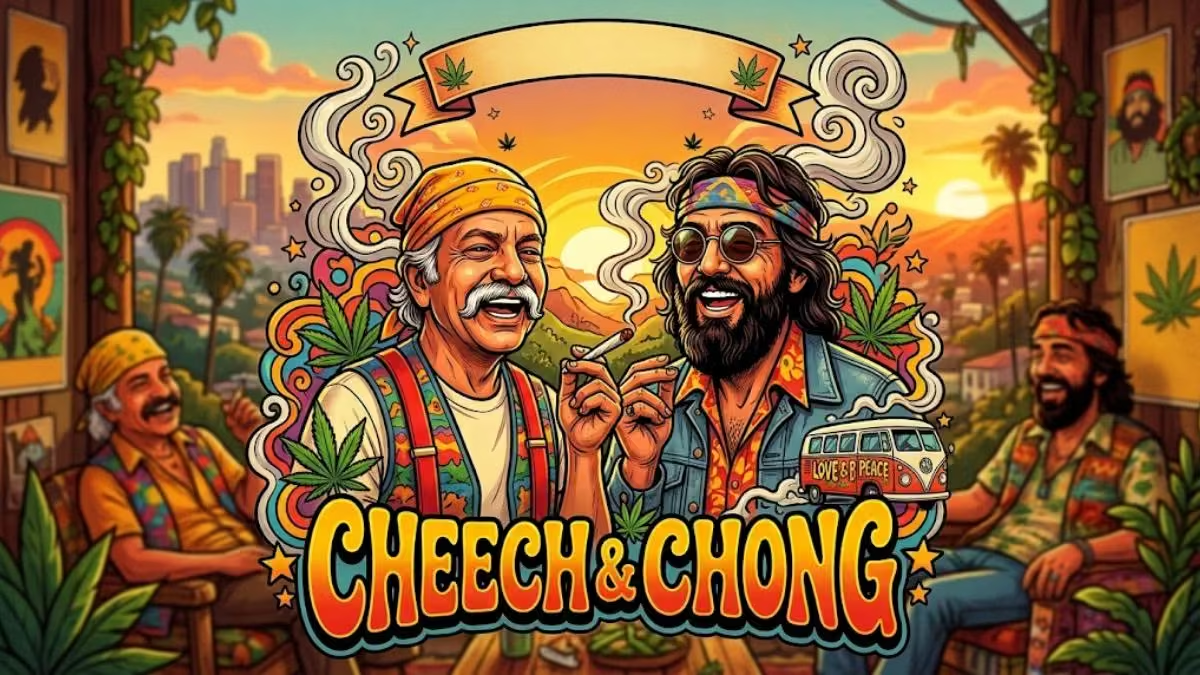
When Richard “Cheech” Marin and Thomas B. Kin Chong teamed up in the late 1960s, few could have predicted that two improv comedians operating out of a Vancouver strip club would redefine American comedy. Cheech & Chong did not just invent a subgenre; they created an entire cultural ecosystem. Before their rise, cannabis and counterculture were treated by mainstream media either with severe moral panic or as fringe underground novelties. Cheech & Chong brought the free-spirited, rebellious, and hilarious realities of 1970s youth culture directly into living rooms, movie theaters, and vinyl record players across the globe.
Decades after their debut, the duo remains an iconic symbol of comedy, artistic independence, and countercultural pride. Their evolution from gritty stand-up stages to Grammy Award–winning audio albums, box-office blockbuster films, and ultimately a multi-million dollar modern cannabis enterprise is one of the most fascinating trajectories in show business history.
1. The Genesis: How Cheech & Chong Came Together
The story of Cheech & Chong begins in Vancouver, British Columbia, during the late 1960s.
- Tommy Chong: A native of Alberta, Canada, Chong was originally a musician. He played guitar for the Soul’d Out / Bobby Taylor & the Vancouvers rhythm-and-blues group, which was signed to Motown Records. After leaving the band, Chong managed a Vancouver strip club called City Works. To draw bigger crowds, he began staging comedy and improv acts involving a troupe called City Works Improv.
- Cheech Marin: Born in South Los Angeles, Richard Marin earned the nickname “Cheech” (short for chicharrón, a fried pork skin) as a child. To avoid the military draft during the height of the Vietnam War, Marin moved to Vancouver in 1967.
When Marin arrived in Canada, he met Chong through mutual acquaintances and auditioned for Chong’s comedy troupe. The duo immediately realized their natural comedic chemistry. Cheech provided fast-talking, sharp-witted Chicano street smarts, while Chong embodied the slow-paced, laid-back, overly relaxed hippie stereotype.
+———————————————————————–+
| CHEECH & CHONG AT A GLANCE |
+————————–+——————————————–+
| Members | Cheech Marin & Tommy Chong |
| Era Active | 1971–1985; 2004–present |
| Breakthrough Medium | Audio Comedy Albums (Vinyl) |
| Signature Movie | Up in Smoke (1978) |
| Accolades | Grammy Award for Best Comedy Album (1973) |
| Cultural Impact | Pioneers of “Stoner Comedy” Subgenre |
+————————–+——————————————–+
2. The Audio Era: Conquering the Vinyl Charts
Long before they appeared on movie screens, Cheech & Chong conquered audio entertainment. During the early 1970s, stand-up comedy was primarily consumed via vinyl records, and Cheech & Chong mastered the art of audio-driven sketch comedy.
Key Early Albums
- Cheech and Chong (1971): Their self-titled debut album included legendary sketches such as “Dave”—a short, absurd bit about a man trying to get into his own home while his friend refuses to open the door because “Dave’s not here, man.” The phrase became an immediate catchphrase across America.
- Big Bambu (1972): Packaged creatively with a giant rolling paper inside the vinyl sleeve, this record became a massive hit, earning a Grammy nomination.
- Los Cochinos (1973): This album won the Grammy Award for Best Comedy Album. It solidified their place as mainstream recording stars who could top the Billboard charts alongside popular rock bands of the era.
- Wedding Album (1974) & Sleeping Beauty (1976): These records expanded their storytelling, integrating musical parody, satire, and pop-culture riffs.
What made their audio sketches work was impeccable sound design, razor-sharp timing, and an authentic warmth between the two characters. Rather than mocking drug users from the outside, Cheech & Chong spoke from within the culture, making their humor relatable to millions of young people.
3. Cinema Pioneers: The ‘Up in Smoke’ Revolution
In 1978, Cheech & Chong took a massive gamble by translating their comedy sketches into a full-length narrative feature film: Up in Smoke. Directed by Lou Adler, the movie was made on a modest budget of roughly $2 million.
The Plot and Phenomenon
The film follows Anthony “Man” Stoner (Chong), a runaway drummer, and Pedro de Pacas (Cheech), a Chicano lowrider, as they accidentally end up driving a van made entirely of “Fiberweed” across the US–Mexico border while being pursued by the relentless, neurotic Sergeant Stedenko (played brilliantly by Stacy Keach).
UP IN SMOKE (1978) IMPACT
—————————————————————–
[Budget]: ~$2,000,000
[Box Office]: ~$100,000,000+ worldwide
[Legacy]: Established the cinematic template for counterculture comedy.
Up in Smoke was a colossal box-office hit, grossing over $100 million worldwide. It established the structural template for future comedic subgenres, proving that non-mainstream youth culture possessed enormous commercial appeal.
Subsequent Filmography
Following the success of Up in Smoke, the duo wrote and starred in a series of feature films throughout the late 1970s and 1980s:
| Year | Title | Key Themes & Legacy |
| 1978 | Up in Smoke | The foundational stoner comedy movie; massive box office hit. |
| 1980 | Cheech & Chong’s Next Movie | Showcased Cheech’s dual role as his cousin “Red” and deepened character dynamics. |
| 1981 | Nice Dreams | Blended ice-cream truck operations with comedy, featuring a cameo by Timothy Leary. |
| 1982 | Things Are Tough All Over | The duo played dual roles as both themselves and their wealthy Middle Eastern bosses. |
| 1983 | Still Smokin | Filmed partly in Amsterdam; heavy emphasis on live stand-up performance footage. |
| 1984 | The Corsican Brothers | A historical comedy parody based on Alexandre Dumas’s classic novel; shifted away from modern drug themes. |
4. The Breakup, Solo Careers, and Reconciliation
By the mid-1980s, creative differences began to pull the duo apart. Cheech Marin wanted to branch out into mainstream acting, directing, and traditional Hollywood roles. Tommy Chong preferred to stick close to counterculture comedy and character-driven work. In 1985, after releasing The Corsican Brothers, the duo officially split.
Cheech Marin’s Solo Path
Cheech successfully transitioned into mainstream Hollywood acting and voiceover work:
- Born in East L.A. (1987): Written, directed by, and starring Cheech, this film offered a biting satirical take on immigration policies and earned critical acclaim.
- Voice Acting: Cheech lent his distinct voice to classic Disney animated features, including Banzai the Hyena in The Lion King (1994) and Ramone in Pixar’s Cars franchise.
- Television & Drama: He co-starred in the hit TV series Nash Bridges alongside Don Johnson and made frequent appearances in films directed by Robert Rodriguez (Desperado, From Dusk Till Dawn, Spy Kids).
- Art Collectorship: Marin became one of the nation’s foremost collectors of Chicano art, culminating in the opening of The Cheech Marin Center for Chicano Art & Culture (known as “The Cheech”) in Riverside, California.
Tommy Chong’s Path and Activism
Tommy Chong stayed deeply embedded in counterculture activism and independent comedy:
- That ’70s Show: Chong found a new generation of fans playing Leo Chingkwake, the lovable, aging hippie camera-store owner on the hit sitcom That ’70s Show.
- Legal Battles: In 2003, Chong became a target of the federal government’s “Operation Pipe Dreams.” He served nine months in federal prison for selling glass bongs online through his family’s business. His sentence made him a martyr for the cannabis legalization movement, fueling nationwide debate over federal drug enforcement priorities.
The Reunion
After nearly two decades apart, Cheech & Chong reunited in 2008 for the “Light Up America” comedy tour. The sold-out tour proved that their fan base had not diminished—it had simply expanded to include multiple generations of viewers.
5. From Counterculture Icons to Modern Business Empire
As state-level legalization swept across North America during the 2010s and 2020s, Cheech & Chong transformed their legacy into a sophisticated, multi-state enterprise.
Rather than simply licensing their names for passive royalties, the duo launched Cheech and Chong Cannabis Co. and Cheech and Chong’s Global Holding Company.
┌─────────────────────────────────────────┐
│ CHEECH & CHONG ENTERPRISES │
└────────────────────┬────────────────────┘
│
┌─────────────────────────┴─────────────────────────┐
▼ ▼
┌────────────────────────────┐ ┌────────────────────────────┐
│ Cheech & Chong Cannabis Co.│ │ Cheech & Chong Global │
│ (State-Legal Dispensaries)│ │ (Hemp-Derived / Direct) │
└──────────┬─────────────────┘ └──────────┬─────────────────┘
│ │
├─► Flower & Pre-Roll Lines ├─► THC Beverages
├─► Licensed Dispensary Locations ├─► Farm-Bill Edibles
└─► State-by-State Partnerships └─► National Retail Distribution
Key Business Highlights
- Multi-Million Dollar Revenue: By the mid-2020s, their combined cannabis and hemp enterprises surged toward nearly $100 million in annual revenue, making them one of the most successful celebrity-backed brands in the industry.
- Hemp & THC Beverages: Capitalizing on federal regulations permitting hemp-derived THC products under the Farm Bill, the brand aggressively expanded into mainstream retail channels, securing distribution for hemp-infused drinks and edibles in thousands of retail locations nationwide.
- Branded Dispensaries: They established branded dispensaries across multiple legal states—including Massachusetts, Maine, New Mexico, and Texas—providing curated lines of flower, infused pre-rolls, and artisanal edibles.
6. Why Cheech & Chong Still Matter: Cultural Significance
The legacy of Cheech & Chong extends far beyond gags and comedy routines. Their contributions changed American entertainment in three major ways:
1. Normalizing Counterculture in Mainstream Media
Before Cheech & Chong, portrayal of drug use in media was defined by fear-based propaganda like Reefer Madness. Cheech & Chong demystified the subculture, framing it through benign, slapstick, everyday human experiences.
2. Pioneering Chicano Representation
Cheech Marin was one of the first Chicano actors to break into mainstream American entertainment without hiding his identity. His portrayal of urban Mexican-American life brought Latino culture, street slang, and lowrider traditions into suburban living rooms across America, paving the way for future generations of Latino performers and filmmakers.
3. The Blueprint for Modern Ensemble Comedy
The duo’s dynamic established the archetype for buddy comedy double-acts that followed. You can trace a direct line from Cheech & Chong to:
- Bill & Ted’s Excellent Adventure
- Wayne’s World
- Friday (Craig and Smokey)
- Harold & Kumar Go to White Castle
- Pineapple Express
Conclusion: The Enduring Power of Laughs
Cheech & Chong started as an improbable pairing of two fringe performers who found humor in places Hollywood refused to look. Through raw talent, perfect comic timing, and an unshakeable understanding of their audience, they transformed from underground comedians into global pop-culture icons.
Whether viewed through the lens of their classic vinyl records, their genre-defining movies, or their modern business ventures, Cheech & Chong stand as timeless architects of American comedy. They proved that laughter transcends social taboos—and that staying true to your authentic voice can build an enduring legacy.