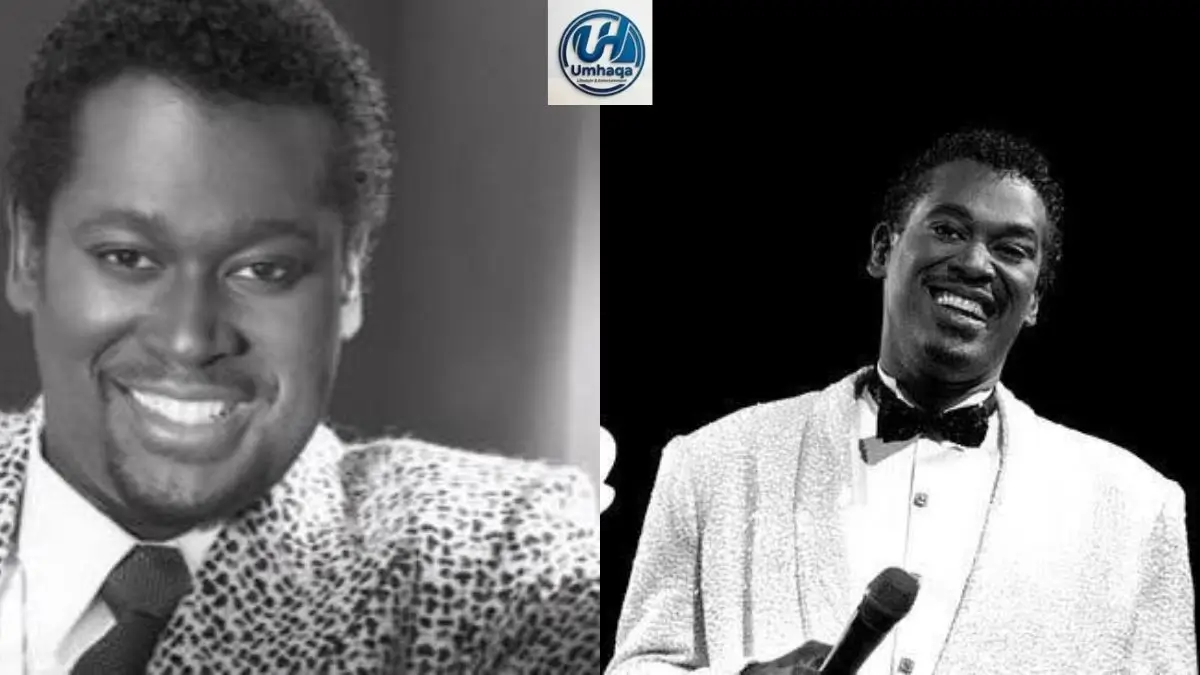
Charles Anthony Vandross is remembered mainly as the older brother of Luther Vandross, one of the most admired R&B vocalists of his generation. Unlike his Grammy-winning younger brother, Charles did not build a documented entertainment career, give widely circulated interviews, or leave behind a large media archive.
That lack of information has created confusion. Many online profiles mix verified facts with assumptions about his personality, profession, and influence. A responsible account must separate the limited public record from claims that cannot be confirmed.
What emerges is not the story of a forgotten celebrity. It is the story of a private member of a famous musical family—a son, brother, and father whose name remains connected to the Vandross legacy even though much of his life stayed outside public view.
Who Was Charles Anthony Vandross?
Genealogy indexes and memorial records list Charles Anthony Vandross as being born on February 7, 1947, in New York City. The same sources report that he died in New York on April 30, 1991, aged 44. They identify his parents as Luther Vandross Sr. and Mary Ida Shields Vandross.
Charles was one of four children. His siblings were Patricia, Ann, and Luther Ronzoni Vandross Jr. Luther’s official website confirms that the singer was born in 1951 as the fourth child and second son of Mary Ida and Luther Vandross Sr.
Because Luther achieved international fame, Charles is often introduced only as “Luther Vandross’s brother.” That description is accurate but incomplete. Charles shared the same household, experienced the family’s early losses, and lived through the period in which Luther’s musical interests grew into a professional career.
Early Life and Family Background
The Vandross family spent Luther’s early years on Manhattan’s Lower East Side in the Alfred E. Smith Houses. Luther’s official biography describes a musical home in which his mother encouraged his talent from childhood and his sister Patricia sang in vocal groups.
Their father, Luther Vandross Sr., worked as an upholsterer and was also a singer, while Mary Ida worked as a nurse. The children grew up in New York during an era shaped by gospel, doo-wop, soul, and rhythm and blues. Although that environment formed part of Charles’s upbringing, no strong evidence shows that he pursued music professionally.
The family suffered a major loss in 1959 when Luther Vandross Sr. died from complications associated with diabetes. Luther was eight, while Charles was about twelve. Mary Ida then raised the children without her husband. Their father’s death later became central to Luther’s memories and inspired the emotional foundation of “Dance with My Father.”
Some websites describe Charles as a substitute father and professional mentor to Luther. That may sound plausible because he was an older brother, but no widely available family statement or authoritative biography clearly documents such a role. Possibility should not be presented as proven biography.
Charles Anthony Vandross and Luther Vandross
The brothers’ relationship remained private. No well-known interview features Charles discussing Luther, and official biographies provide little information about Charles’s occupation, personality, or involvement in the singer’s career.
One rare family detail appears in Luther’s official biography. Luther recalled that his brother might receive a bicycle for Christmas while he received an Aretha Franklin album. The memory shows how clearly Luther’s musical interests were recognized within the household and offers a brief glimpse of Charles in an authentic family story.
Several websites claim that Charles performed with the Listen My Brother Revue, appeared on Sesame Street, or worked behind the scenes in music. These statements deserve caution. Luther’s official site attributes the Apollo Theater appearances, Listen My Brother membership, and early Sesame Street performances to Luther himself—not to Charles.
The safest conclusion is simple: Charles was Luther’s older brother and part of the family environment from which the singer emerged, but the public record does not establish Charles as a musician, manager, or entertainment-industry collaborator.
A Private Adult Life
Charles appears to have lived mostly outside the spotlight. His education, profession, marriage history, and daily life are not thoroughly documented in dependable public sources. Before social media, relatives of famous performers could live ordinary lives without generating extensive public records.
A 2024 obituary for Tonia Lazz Vandross identifies her parents as Charles Anthony Vandross and Doreen Mollette. This provides public evidence that Charles was a father, although reliable details about his wider household remain limited.
The missing information should be respected rather than filled with invented details. Claims about Charles’s net worth, height, career ambitions, or sacrifices for Luther are often repeated without dependable sourcing. Repetition can make a statement appear authoritative, but it does not make it factual.
This limited record is central to the untold story. Charles was connected to a globally recognized artist but was not himself a public personality. A famous surname does not automatically turn every family member into a celebrity.
What Happened to Charles Anthony Vandross?
Public genealogy and memorial sources agree that Charles died on April 30, 1991, in New York City at only 44 years old.
A 2003 newspaper report about Mary Ida Vandross stated that Charles and his sister Patricia died from complications related to diabetes, while their sister Ann died from complications associated with asthma. Because easily accessible primary medical documentation has not been published, diabetes complications are best described as the reported cause of Charles’s death.
Charles died during an important period in Luther’s career. The Recording Academy’s records show that Luther won his first Grammy for “Here and Now” in 1991. Charles’s death therefore came in the same year that his younger brother reached a major professional milestone.
There is little public evidence showing how Luther discussed the loss personally. The wider family pattern, however, is documented: Charles, Patricia, and Ann all died before Luther, and Mary Ida eventually outlived her husband and all four children. Smithsonian material also notes the earlier deaths of Luther’s father and older siblings.
Charles’s Place in the Vandross Legacy
Charles did not leave behind a famous recording catalogue, but his place in the family connects him to an important chapter in American music. Luther became an acclaimed singer, songwriter, arranger, and producer whose voice helped define sophisticated R&B and romantic balladry.
Luther’s official biography credits him with eight number-one R&B albums, seven number-one R&B singles, and more than 40 million records sold worldwide. The Recording Academy lists eight Grammy wins and 33 nominations, including major awards for “Dance with My Father.”
These achievements naturally increase interest in Luther’s background. Fans want to understand who surrounded him before fame and how family relationships shaped songs about love, memory, and loss. Charles forms part of that background, even though the evidence does not permit writers to assign him a specific creative role.
His legacy is familial rather than professional. He was the older brother of an artist whose music reached millions, the son of Mary Ida and Luther Sr., the sibling of Patricia and Ann, and the father of Tonia. Those relationships remain meaningful even though they unfolded outside entertainment.
Why Is So Little Known About Charles?
Charles died in 1991, before social media and large digital celebrity archives became normal. He was not known to have held a public-facing profession, and most media attention naturally focused on Luther.
Modern search interest has encouraged websites to construct complete-looking biographies from only a few established facts. As one site copies another, speculation can begin to resemble evidence. Readers may therefore encounter unsupported descriptions of Charles as Luther’s mentor, a former performer, or a beneficiary of the Vandross estate.
A trustworthy profile should acknowledge the gaps. Charles’s occupation and education are not reliably confirmed. There is no verified evidence that he performed on Sesame Street, joined Listen My Brother, or managed Luther’s career. His personal net worth is unknown, and no authoritative source offers a detailed portrait of his private character.
Recognizing these limits does not weaken his story. It makes it honest.
The Real Untold Story
The phrase “untold story” often promises a dramatic secret. In the case of Charles Anthony Vandross, the real untold story is quieter. It concerns the distance between public curiosity and documented truth.
Charles lived for 44 years, but only fragments of his life remain visible in searchable records. The confirmed facts show New York roots, membership in the Vandross family, fatherhood, and an early death. Everything beyond those points requires caution.
Remembering Charles accurately means resisting the urge to transform him into a hidden music executive or uncredited architect of Luther’s success without evidence. He deserves recognition as a real person, not as a blank space for an invented celebrity narrative.
Frequently Asked Questions
Who was Charles Anthony Vandross?
Charles Anthony Vandross was Luther Vandross’s older brother and one of four children born to Luther Vandross Sr. and Mary Ida Shields Vandross.
When was Charles Anthony Vandross born, and when did he die?
Records report that he was born on February 7, 1947, in New York City and died there on April 30, 1991, aged 44.
What was Charles Anthony Vandross’s reported cause of death?
A newspaper report stated that Charles died from complications related to diabetes. Because a primary medical record was not located, this should be treated as the reported cause rather than an independently confirmed medical finding.
Was Charles Anthony Vandross a singer?
No authoritative source reviewed for this article confirms that Charles had a professional singing career. Official material credits Luther with the Listen My Brother Revue and Sesame Street appearances sometimes attributed to Charles.
Did Charles Anthony Vandross have children?
A published obituary identifies Tonia Lazz Vandross as the daughter of Charles Anthony Vandross and Doreen Mollette.
Conclusion
Charles Anthony Vandross remains intriguing because his name sits close to musical greatness while his own life stayed mostly private. The confirmed record is limited but meaningful: he was born in New York in 1947, grew up within the Vandross family, became a father, and died in 1991 at only 44.
His connection to Luther Vandross will continue to drive public interest, but it should not justify unsupported claims. Charles’s most accurate legacy lies in his place within a family shaped by music, love, ambition, and repeated loss.
The honest story contains fewer dramatic details than many online biographies, yet it offers something more valuable: a respectful portrait built around what can actually be documented.